← The Cost of Selling Transformation Blockers
When Channels Fight Each Other

B2B Sales Channels: How to Align Field Reps, Inside Sales, Customer Portals, and Marketplaces
Disconnected digital and direct sales channels drive up B2B transaction costs. Learn how to govern pricing, orders, and commissions across all touchpoints.
Read →
B2B Portals and Sales Reps: How the Rep's Role Shifts When Buyers Order Directly
Learn how self-service ordering transforms field sales reps from routine order-takers into strategic growth drivers in B2B commerce.
Read →
Phased B2B Channel Programs: Partner Tiers and Ideal Customer Profile
Scaling indirect sales without enforceable rules causes channel conflict and margin loss. Here is how to structure a B2B partner program in clear phases.
Read →
Reps and Buyers in the Same B2B Portal: Unifying Experience Without Shadow Channels
Running separate systems for reps and customer self-service splits your order history. Learn how to unify both in a single digital commerce flow.
Read →
B2B Channel Conflict: When Your Portal and Sales Reps Offer Different Prices
When digital commerce and field reps compete with disparate pricing, profitability drains away. Learn how unified commercial governance stops channel cannibalization.
Read →
Messaging Apps in B2B: Account Channel or Off-Book Rep Sales?
Learn how informal direct rep messaging erodes B2B margins and how to integrate mobile communications into account-level digital governance.
Read →
VTEX vs Spryker: which fits a B2B marketplace with sellers?
A comparison for commerce leaders between VTEX and Spryker for B2B marketplaces: pricing, quoting, ERP integration, billing, and implementation, with each vendor's public records on what the seller controls, the winning offer, and the merchant relationship.
Read →
OroCommerce vs Salesforce Commerce Cloud: which price applies in B2B?
A Director of Commerce comparison of OroCommerce and Salesforce Commerce Cloud: OroCommerce combines price lists by website, group, and customer, converts requests for quote into quotes or orders, with only one quote workflow active per application, and assigns payment terms to the customer; Salesforce Commerce Cloud puts B2B and D2C in the same org, with price lists and entitlements loaded by CSV, up to 25 price books evaluated per call, and an always custom B2B checkout.
Read →
VTEX vs Salesforce Commerce Cloud: can B2B and retail coexist?
A comparison of VTEX and Salesforce Commerce Cloud for the Director of Commerce: how B2B promotions and price tables coexist with retail ones on the same platform, with two public records on each side.
Read →
B2B sales reps: VTEX or CWS Platform?
A B2B portal and sales force comparison for the VP of Sales: VTEX records that Sales App does not support the B2B model yet, and an open known issue makes order history follow the rep's permissions during impersonation. On CWS Platform, customer and sales rep use the same interface.
Read →
Multi-store inventory: VTEX or CWS Platform?
A comparison for the COO of a store network: VTEX records as an open known issue that warehouse choice follows the order in which warehouses appear in the system, and marked No Fix a deleted warehouse that remains in the availability base. On CWS Platform, the sales rep builds the cart with the source of each item.
Read →
Fashion wholesale: VTEX or CWS Platform?
A fashion wholesale comparison for the VP of Sales: VTEX records that Quick Order adds items in parallel batches of 10, with concurrency risk, and that exporting orders with more than 200 SKUs can time out (No Fix). On CWS Platform, the cart holds 250 line items by default, with a configurable limit, and the largest matrix order goes into the proof.
Read →
Assisted selling: VTEX or CWS Platform?
An assisted selling comparison for the Director of Commerce: in VTEX, two open known issues mean an impersonated order does not register who finished the purchase and the balance shown in telesales is the agent's. On CWS Platform, the order records who built the cart and who chose the payment.
Read →
B2B and B2C in one network: VTEX or CWS Platform?
A complex retail comparison for the CEO: VTEX unifies channels and brings franchise inventory to connected VTEX marketplaces, a feature it discontinued for external marketplaces, but records that payouts are not split across the whole chain in multilevel inventory and that the availability calculation disregards routes above 10,000. On CWS Platform, CDL Workspace is a single system for the entire ecosystem.
Read →
B2B marketplace: Spryker or CWS Platform?
A B2B marketplace comparison for the VP of Sales: how Spryker creates the merchant relation between merchant and buyer, what the documentation says about buy-box and the Merchant Portal, next to CWS Platform rules in parameters and split model.
Read →
Assisted selling and agent assist: Spryker or CWS Platform?
An assisted selling comparison for the Director of Commerce: how Spryker Agent Assist acts in the customer's account, which cart the agent can reach, and the PHP 8.3 calendar, next to the shared customer and sales rep order on CWS Platform.
Read →
Assisted selling: commercetools or CWS Platform?
An assisted selling comparison for the Director of Commerce: commercetools lets the rep take over the customer's session, but its limits guide recommends flattening hierarchies and import endpoints remain in beta. On CWS Platform, customer and rep use the same interface.
Read →
OroCommerce vs. CWS Platform: how does sales rep quoting work?
Architecture comparison for the VP of Sales: in OroCommerce, quoting is a single workflow per application and kits sit outside the quick order form; on CWS Platform, negotiation starts from the cart the sales rep builds and sends as a link.
Read →
Optimizely Configured Commerce or CWS Platform: Can You Change Commercial Rules Without a Ticket?
For revenue leaders: what the Optimizely Configured Commerce documentation records about price breaks and quotes, and where CWS Platform keeps commercial rules.
Read →
B2B Ecommerce with Sales Reps: SAP Commerce Cloud vs CWS Platform
Integrating digital portals with existing sales teams requires solid architecture across pricing, credit limits, and assisted sales. Here is how both platforms compare.
Read →
B2B Marketplace with Sellers: SAP Commerce Cloud vs. CWS Platform
Evaluating whether an integrated Mirakl-plus-SAP architecture or a native unified core best resolves B2B multi-seller operational frictions.
Read →
Why Manufacturers Can No Longer Afford Legacy B2B Platforms
Legacy B2B commerce platforms treat industrial distribution like retail storefronts, alienating rep networks and multiplying custom development costs.
Read →
Wholesale Distributor Marketplace: Moving Beyond Third-Party Platforms
Relying on generic platforms erodes margins and buyer relationships. Learn how launching a wholesale distributor marketplace reclaims commercial control.
Read →
Manufacturer Marketplace: How to Launch Without Channel Conflict
Launching a manufacturer marketplace without channel friction requires onboarding dealers as sellers governed by strict territory and routing rules.
Read →
How to Roll Out a B2B Ordering Portal for Distributors Without Creating Channel Conflict
B2B portals stall when catalogs lack customer-specific pricing and terms. Learn how to launch wholesale ordering without triggering sales rep resistance.
Read →
The Pitfalls of Choosing Retail Software for a B2B Marketplace
Adapting B2C retail tools for wholesale commerce leads to channel conflict and fulfillment errors. Discover how true B2B marketplace software protects margins.
Read →
Assisted Sales and Digital Counter: Salesforce or CWS Platform?
Compare Salesforce with CWS Platform for assisted sales and order desk operations, focusing on margin control, branch inventory, and live order building.
Read →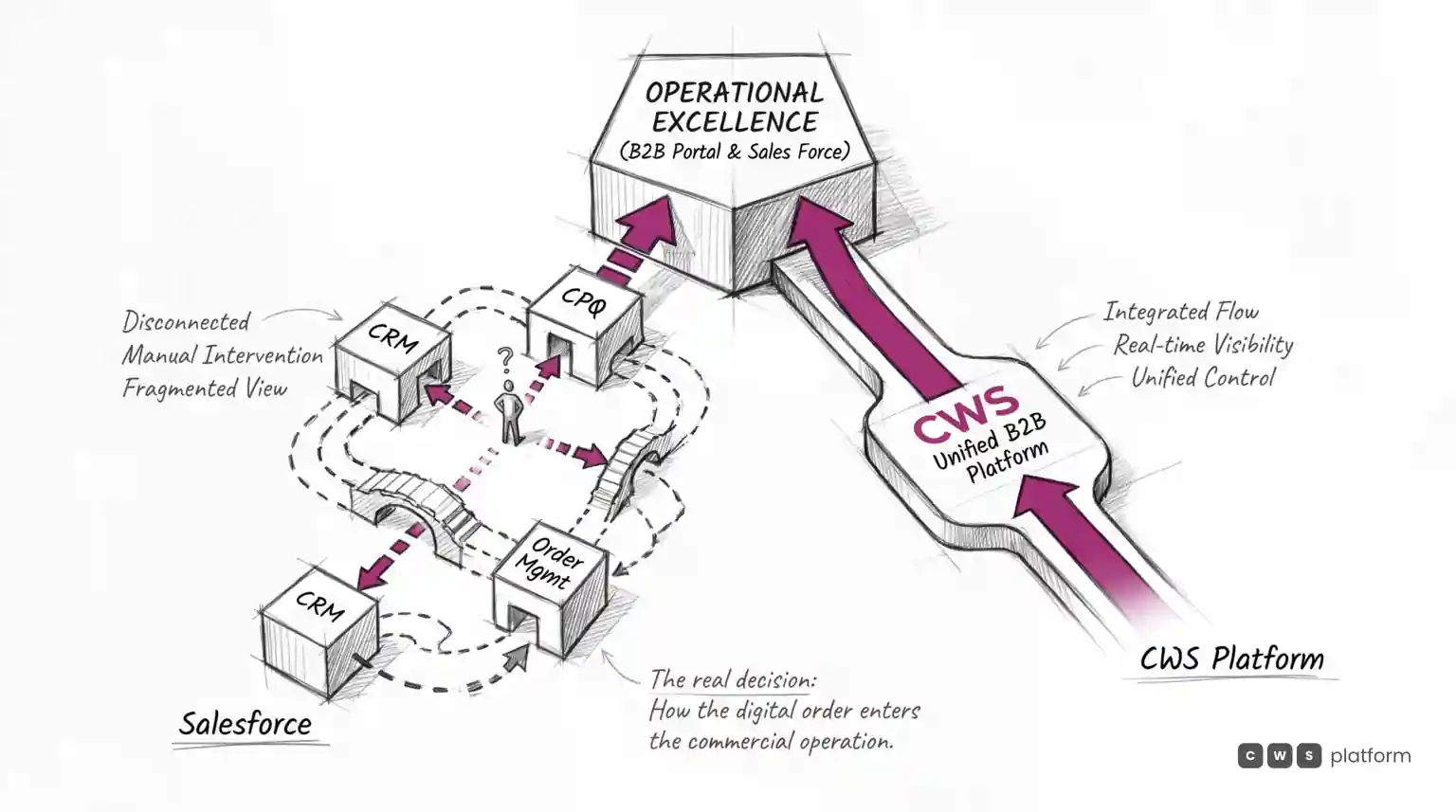
Salesforce vs. CWS Platform: Which Architecture Helps a B2B Portal Sell With Your Sales Team?
This comparison examines how Salesforce and CWS Platform connect a B2B portal to sales operations. The key question is where account context, pricing, approvals, credit, and order governance live.
Read →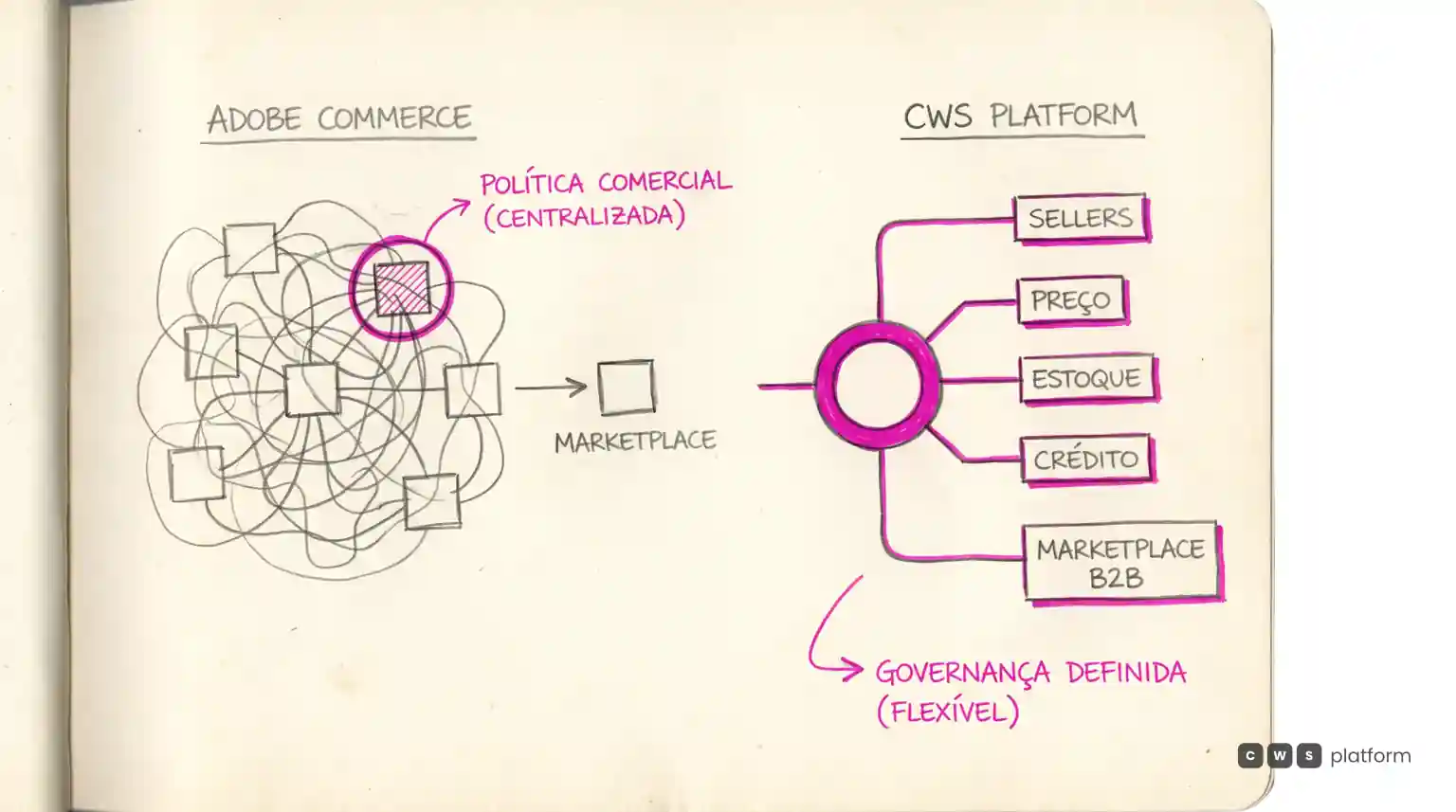
Adobe Commerce vs. CWS Platform: What Architecture Does a B2B Marketplace With Sellers Require?
This comparison examines how Adobe Commerce and CWS Platform structure commercial policy for a B2B marketplace with independent sellers.
Read →
Adobe Commerce vs. CWS Platform: Who Does the CEO Depend On?
Adobe Commerce and CWS Platform create different forms of dependency. The comparison shows whether change sits with engineering, the ecosystem, the vendor, or business operations.
Read →
B2B Portal Meets Counter and Field Sales: Adobe Commerce vs. CWS Platform, Side by Side
A head-to-head architecture comparison for distribution leaders who own marketing and channel revenue: Adobe Commerce's assigned pricing via shared catalogs versus CWS Platform's pricing calculated at the moment of sale. Including the four scenarios where Adobe Commerce is the right call.
Read →
Third-Party Marketplaces as a B2B Demand Channel
Treating Amazon Business or similar marketplaces as the enemy is the wrong move. The strategy that works is using them as a top-of-funnel entry point while building margin on your own channel — but only with price governance and differentiated terms by channel.
Read →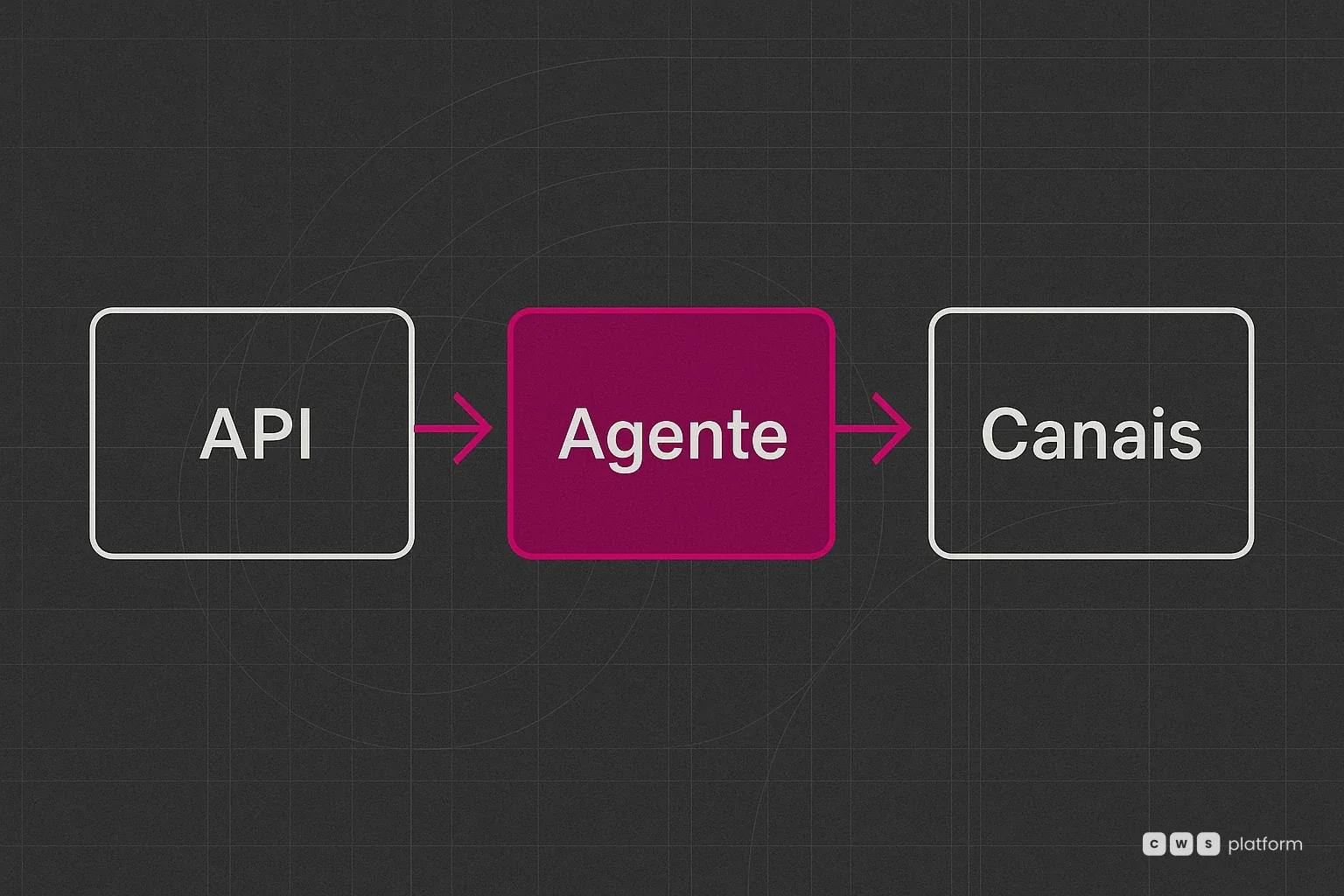
Your AI Agent Will Cut the Same Side Deals Your Sales Reps Already Do
Deploying an AI agent on your B2B portal without first formalizing commercial rules doesn't fix channel conflict — it scales the same off-policy deals your reps already cut, now at volume and without an audit trail.
Read →
Your B2B Portal Is Live. The Governance It Needs to Actually Work Isn't.
Most distributors have digitized the storefront. Few have digitized the decision — and that's where the risk, the margin, and the data that matter actually live.
Read →
When the Manufacturer and the Channel Fight Over the Same Customer
The end customer calls the manufacturer directly, ready to buy — and selling to them is the trap that breaks the channel that built the business. With MTE-Thomson's operation, when going direct destroys more than it captures.
Read →
How an industry built a direct channel that protects its distribution
An industry's official online store that connects technical support and a brand-curated catalog to sales through distributors and retailers, guiding customers to the right part and the right partner.
Read →