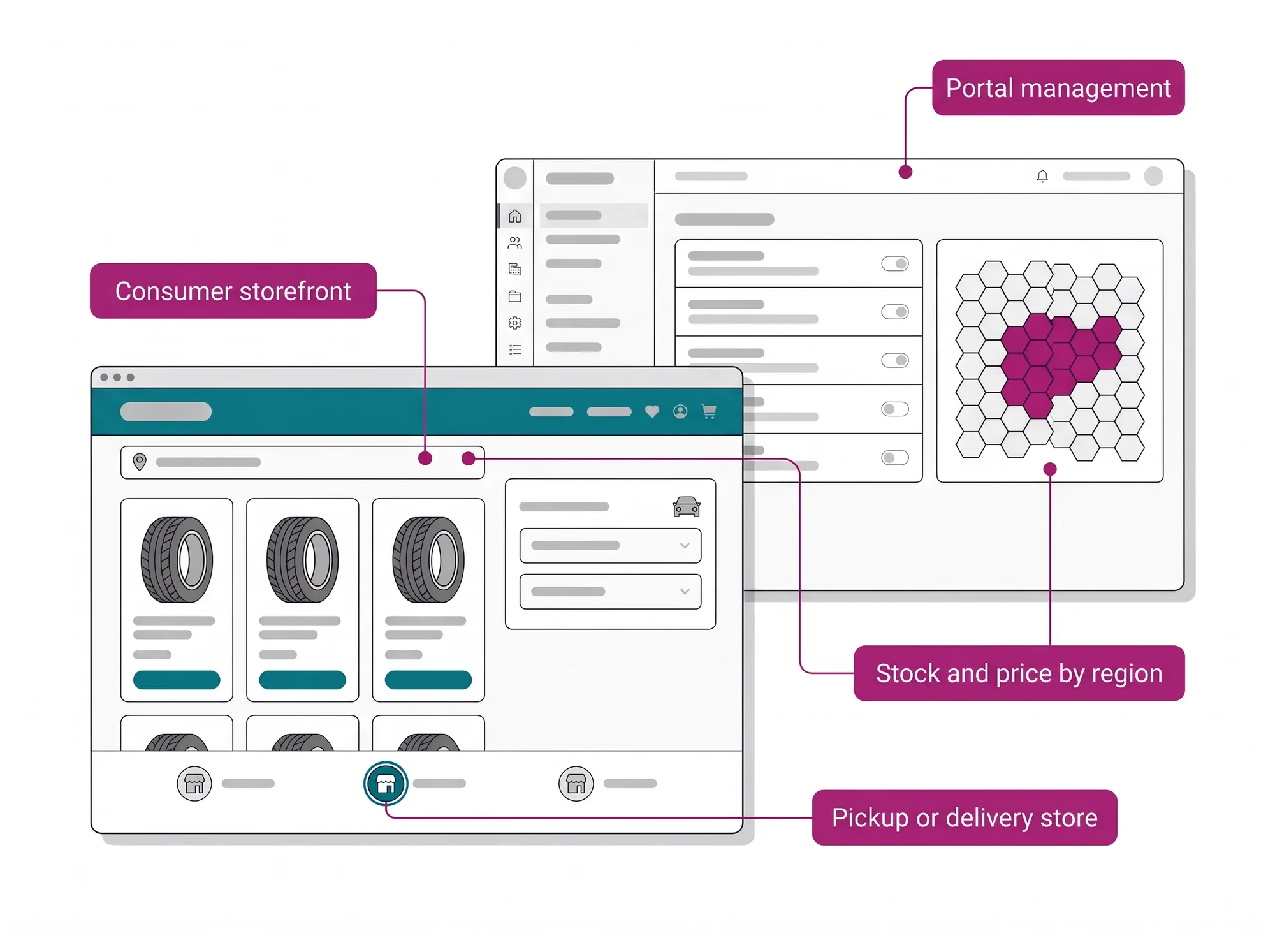
Campneus.com.br is the consumer sales portal of Campneus, a Brazilian network of stores specialized in tires and automotive services, carrying the Pirelli quality seal and operating more than 117 stores across Brazil. The portal runs on CWS Platform technology and sells tires for passenger cars, SUVs and pickups, trucks and buses, motorcycles, agricultural and industrial use, plus replacement parts and automotive services, with pickup or delivery from the store that serves each customer.
This is a scale case: we describe the mechanism and the size of the operation, using public figures. The network’s business results belong to Campneus and are not published here.
An online store in front, a network marketplace behind it
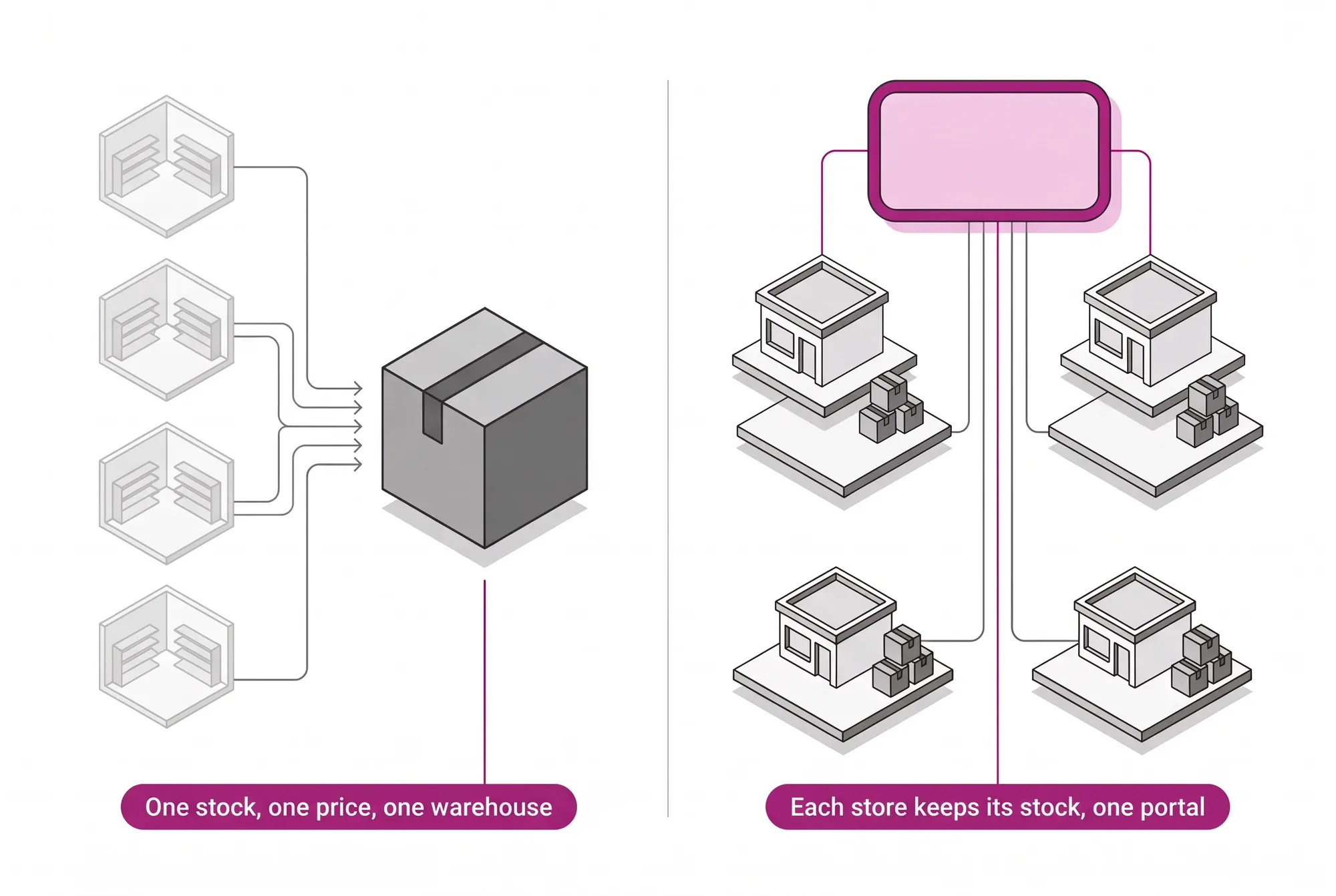
To the shopper, Campneus looks like an online tire store: search, catalog, cart, checkout. Underneath it is something else. Every store in the network has its own stock, its own prices, its own logistics and its own delivery and installation operation. A standard e-commerce setup would flatten all of that into one stock, one price and one warehouse, and the network would lose exactly what makes it competitive: the store near the customer, with the tire on the shelf and the local price.
CWS Platform goes the other way. The portal is a B2C marketplace: each store joins as a store of the portal, with its own stock, pricing and logistics, while portal management governs the rules that apply to all of them. The consumer gets one experience; the network keeps the decentralized operation it already had.
Regionalized stock: every offer shows up where it should
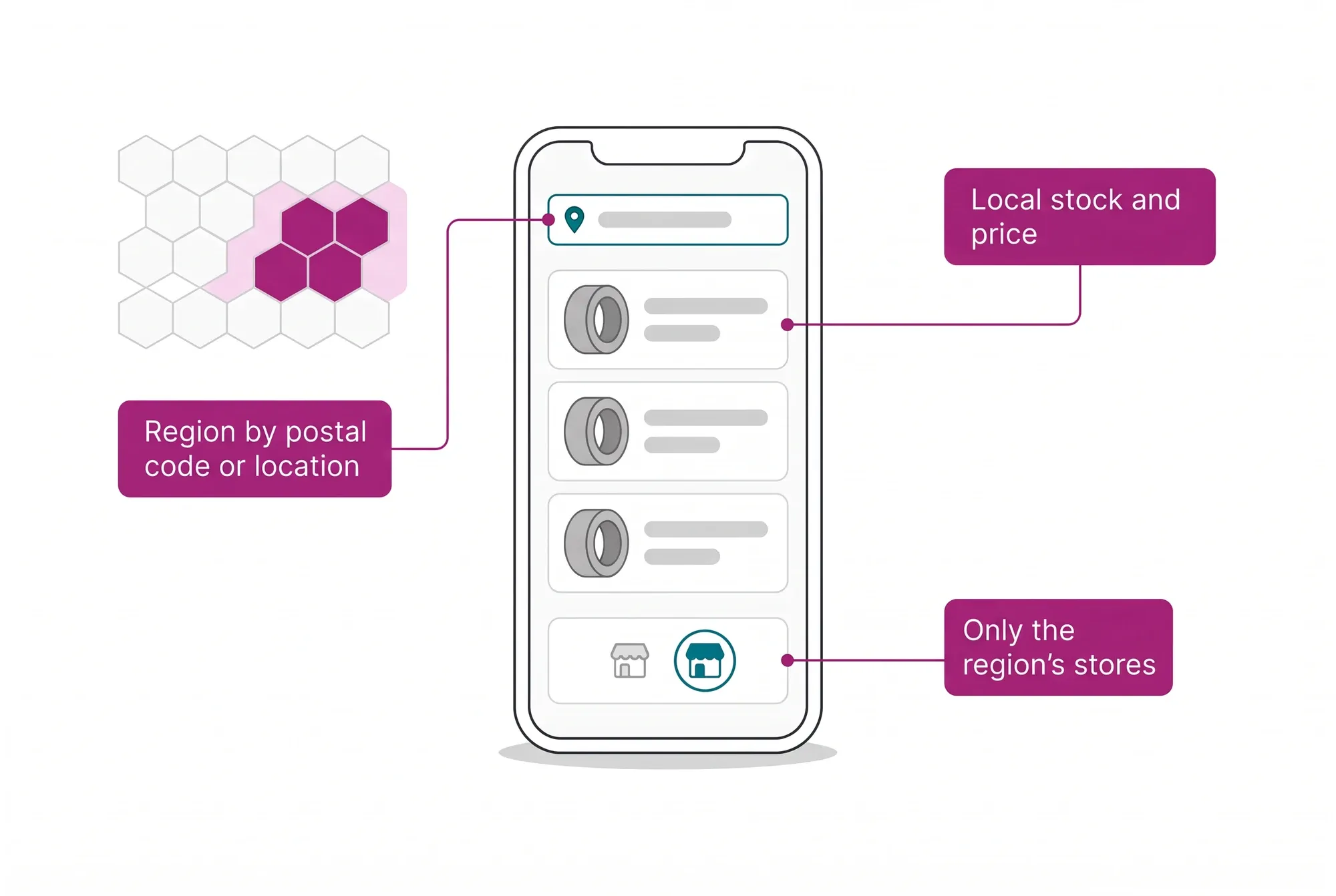
The first question the portal answers is where the customer is. The platform tries to detect the region automatically, the customer confirms it, or the region comes from the ZIP code entered. From then on, the catalog shows what the stores in that region actually have, not a theoretical national inventory.
- Stock by region. Each stock appears in the region where it should, according to portal rules.
- Price by region. The same tire can carry different prices in different markets, and the customer sees the most efficient price for their region.
- Store choice. The customer picks the store for pickup, or the store that will deliver, among those serving their region.
- Only the right stores. Consumers do not see all hundred-plus stores, which would only confuse them. They see the stores portal management chose to show them.
A technical catalog: search by tire or by car
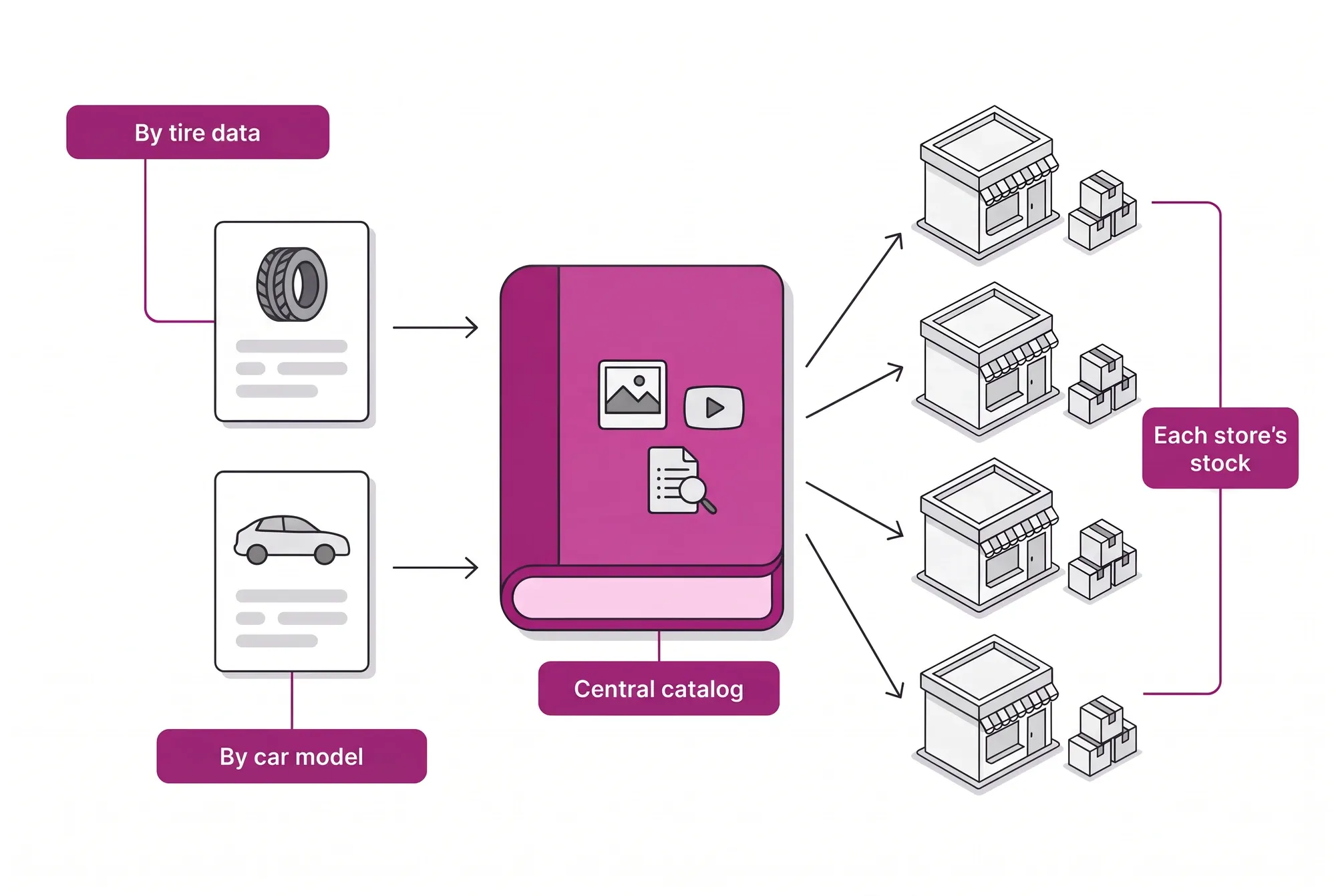
Tires are technical products. Size, load index, speed rating and fitment drive the purchase, and consumers rarely know them by heart. The portal offers two paths: search by the data on the tire itself, or by car model. Each product carries photos, videos, technical data and fitment information, with the navigation expected from a tire and auto parts platform.
The tire catalog is the official Pirelli catalog, maintained centrally. Each store connects its stock to that single catalog instead of keeping its own local descriptions, codes and spec sheets. The same goes for auto parts, and here the platform acted as a project accelerator. Campneus used the catalog system that ships with CWS Platform, the Product Catalog & MDM (Catalog Engine) module, and quickly started offering replacement parts without building a catalog from scratch, with items sourced from dozens of decentralized stores.
One cart, many stores, automatic split
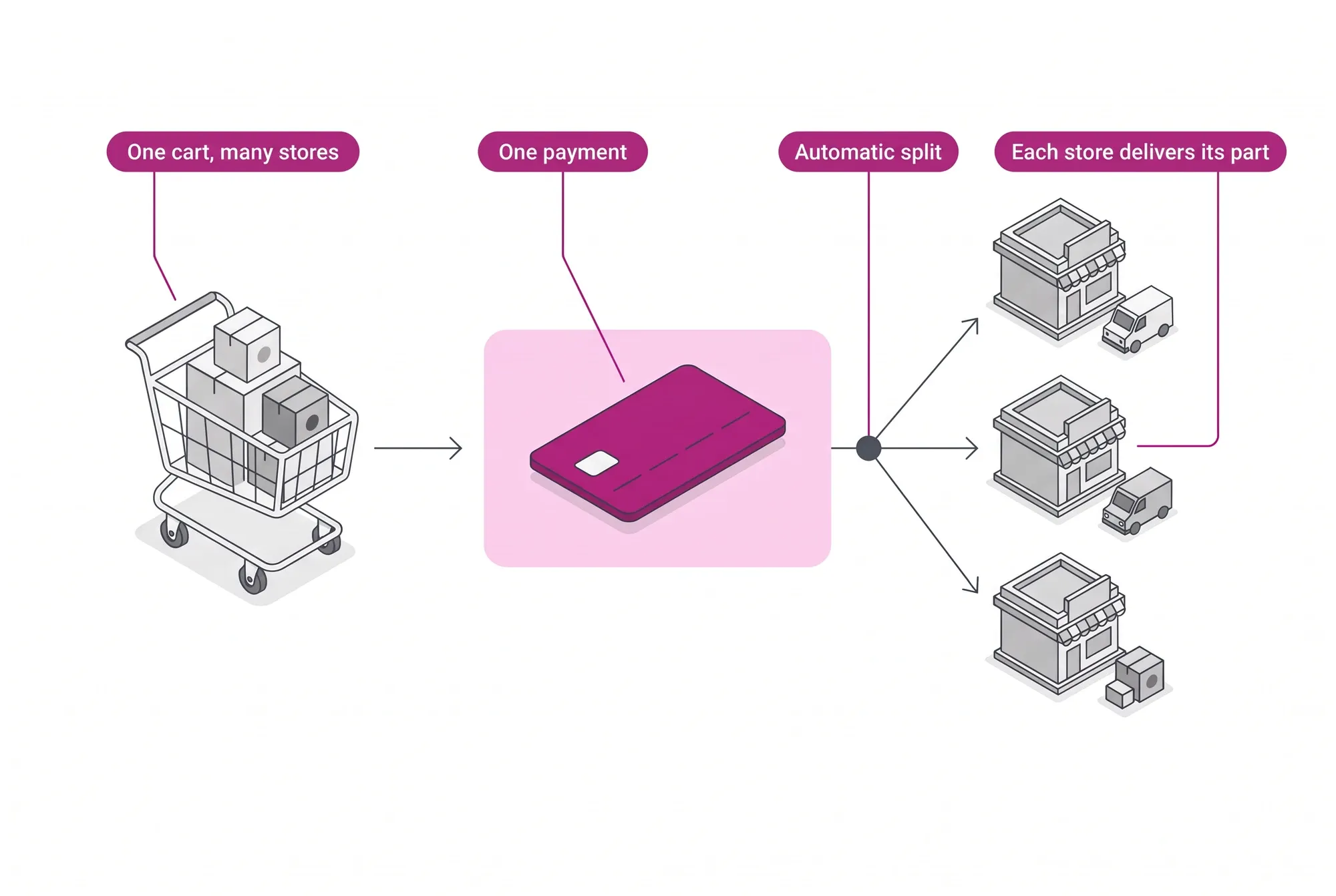
This is where the marketplace really shows. The customer can put products from different stores in the same cart and pay once. Automatic payment split divides the amount among the stores involved, and the order is redistributed: the consumer sees a single order, while each store receives its share and handles its own delivery independently.
Logistics follow the same decentralized logic:
- In-store pickup at the store the customer chose.
- Automatic, decentralized shipping calculation from the serving store, not from a central warehouse.
- Shipping options set by portal management, which decides which methods are available.
And the network sells services alongside products: the customer buys the tire and the automotive service in the same journey.
Portal management governs the rules
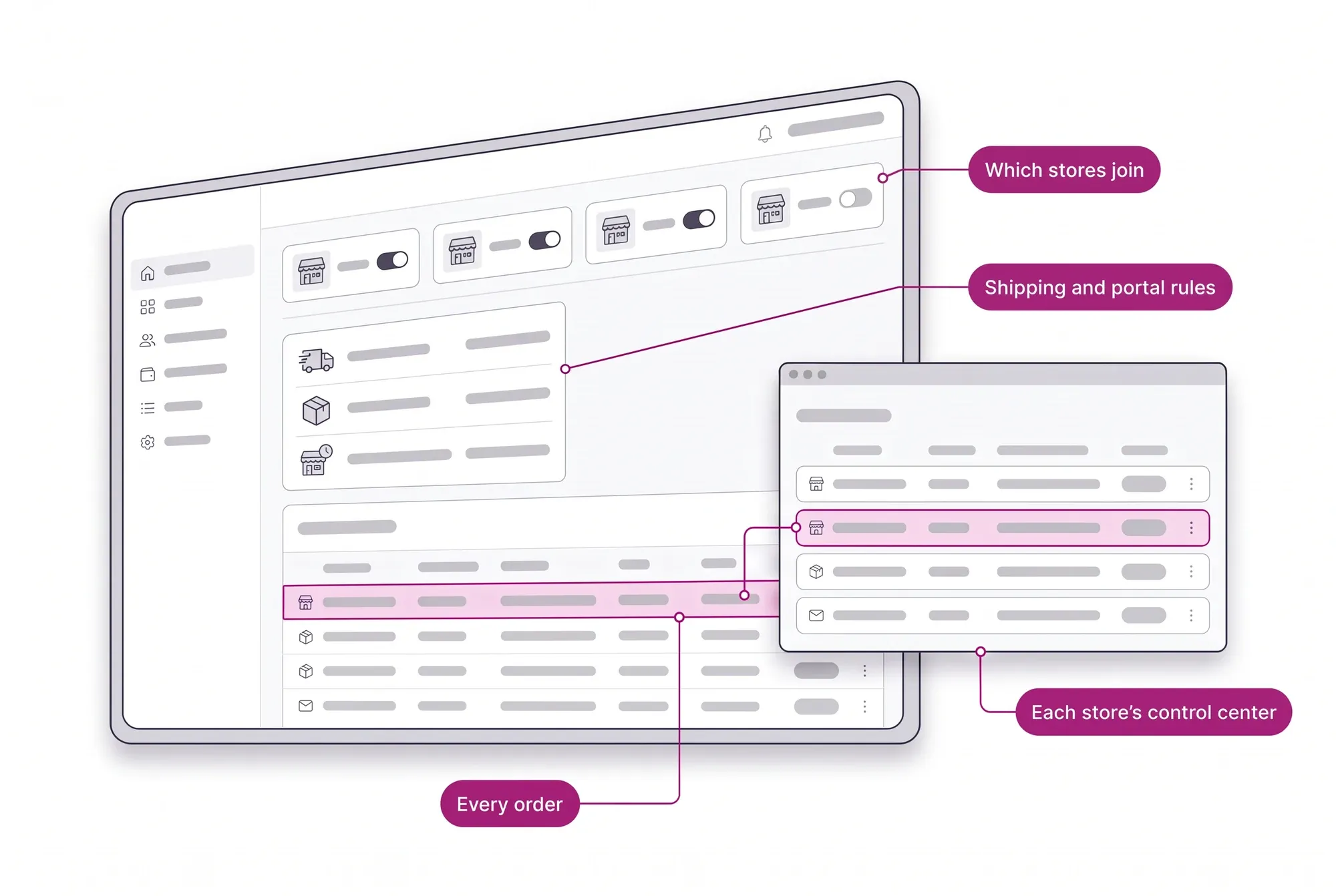
The principle is the same as in every governed portal: portal management governs, each store operates, and CWS Platform runs both layers at once.
- Who is in and who is out. Management decides which stores join the portal and in which regions each one appears.
- The rules of the game. Available shipping, commercial rules, storefronts and campaigns are decided centrally.
- Orders on two levels. Management tracks every order in a centralized back office; at the same time, each store tracks its own orders in its own control center, which speeds up operations without manual handoffs.
- Third parties, when the network wants them. The portal already supports third-party stock and can also become a marketplace for other sellers, not just the Campneus network.
Regional campaigns, all the way to Google Shopping
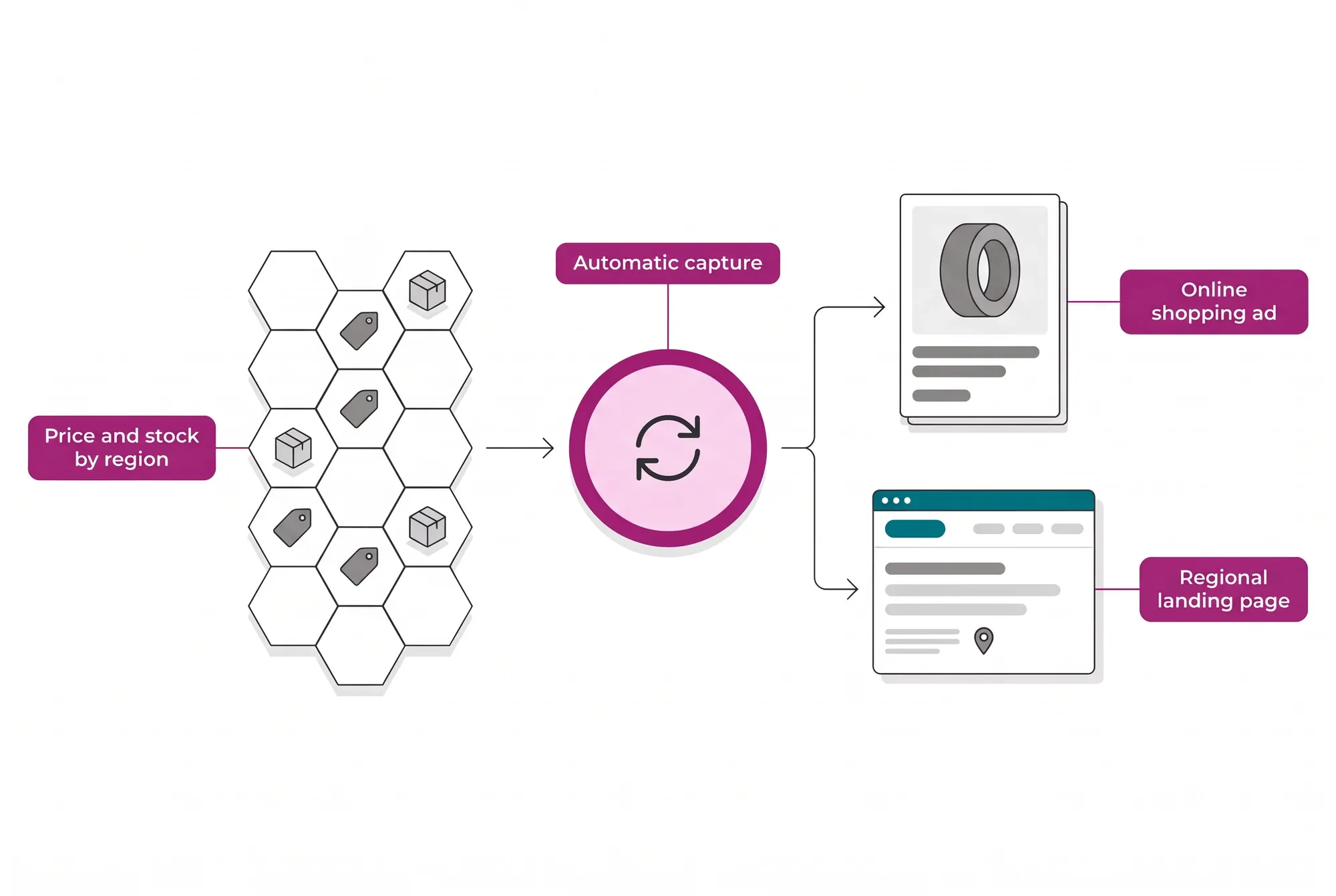
With regionalized stock and pricing, campaigns have to be regional too. Portal management builds shipping, discount and offer campaigns by region, with regionalized landing pages and offer pages, all in a unified, easy-to-run back office.
The same logic reaches online media. A proprietary CWS Platform technology captures price and stock for each region and feeds that information into online shopping campaigns such as Google Shopping. The ad a consumer sees reflects the price and availability in their region, not a national price the nearest store may not offer.
Unified data without a data project
In a decentralized network, bringing data together is usually a project of its own: browsing in one place, campaigns in another, stock in every store. At Campneus, browsing, campaign and decentralized stock data are captured in a unified way from the start, with no new investment in data aggregation technology.
WhatsApp and telesales on the same portal
The portal is integrated with WhatsApp, which is also used as a customer communication channel, and supports telesales integrated into the portal. Human service works on the same stock, the same regional price and the same order the customer sees on screen.
From integration to acceleration
The first phase of the project was the heaviest, and it is behind them: integrating the stores’ decentralized stock and preparing each point of sale’s team for digital operations. With that foundation in place, the project has moved into an acceleration phase, putting the tools for decentralized stock, regional campaigns and complex portal management to work. Adding a new store to the portal becomes a matter of configuring a store, not running a project, and that is what makes the model scale.
Marketplace complexity, without a custom build
A verticalized B2C marketplace with regionalized stock, pricing and shipping, payment split and network governance is usually treated as a long, expensive custom development project. At Campneus, that complexity was absorbed through configuration of a platform built for it from the start, with the catalog module, portal and store layers and a rules engine ready to go. That is what made it possible to launch a project of this size with far less effort and cost than building on a generic platform.
The takeaway: a store network does not have to choose between a simple online store and the strength of each location. With a layered portal, the consumer sees one store, and the network keeps selling with the stock, price and delivery of each local market.
Frequently asked questions about this case
How is this portal different from a regular online tire store?
What sits beneath the storefront. A regular online store assumes one stock, one price and one distribution center. Campneus is a B2C marketplace: more than 117 stores join as stores of the portal, each with its own stock, pricing and logistics, and consumers see only what the stores in their region carry, at that market's price.
How does the portal know which region the customer is in?
The platform tries to detect the region automatically and the customer confirms it, or the region comes from the ZIP code entered. From then on, the catalog, pricing, stores available for pickup or delivery, and shipping all apply to that region.
Can a customer buy from more than one store in the same order?
Yes. Products from different stores go into the same cart, the customer pays once, and automatic split divides the amount among the stores. The consumer sees a single order, while each store receives its share and handles its own delivery.
Does each store have to maintain its own tire catalog?
No. The tire catalog is the official Pirelli catalog, maintained centrally, and each store connects its stock to it. For auto parts, the network used the CWS Platform catalog module, Catalog Engine, as a project accelerator, which let it expand its assortment quickly without building a catalog from scratch.
Why doesn't this case show sales results?
Because the network's business results belong to Campneus. This is a scale case: we show the mechanism and the size of the operation using public figures, such as the network of more than 117 stores connected to the portal.
Qualified access
Talk to someone already running this mechanism in operation
A short conversation unlocks access.
Schedule a conversation →