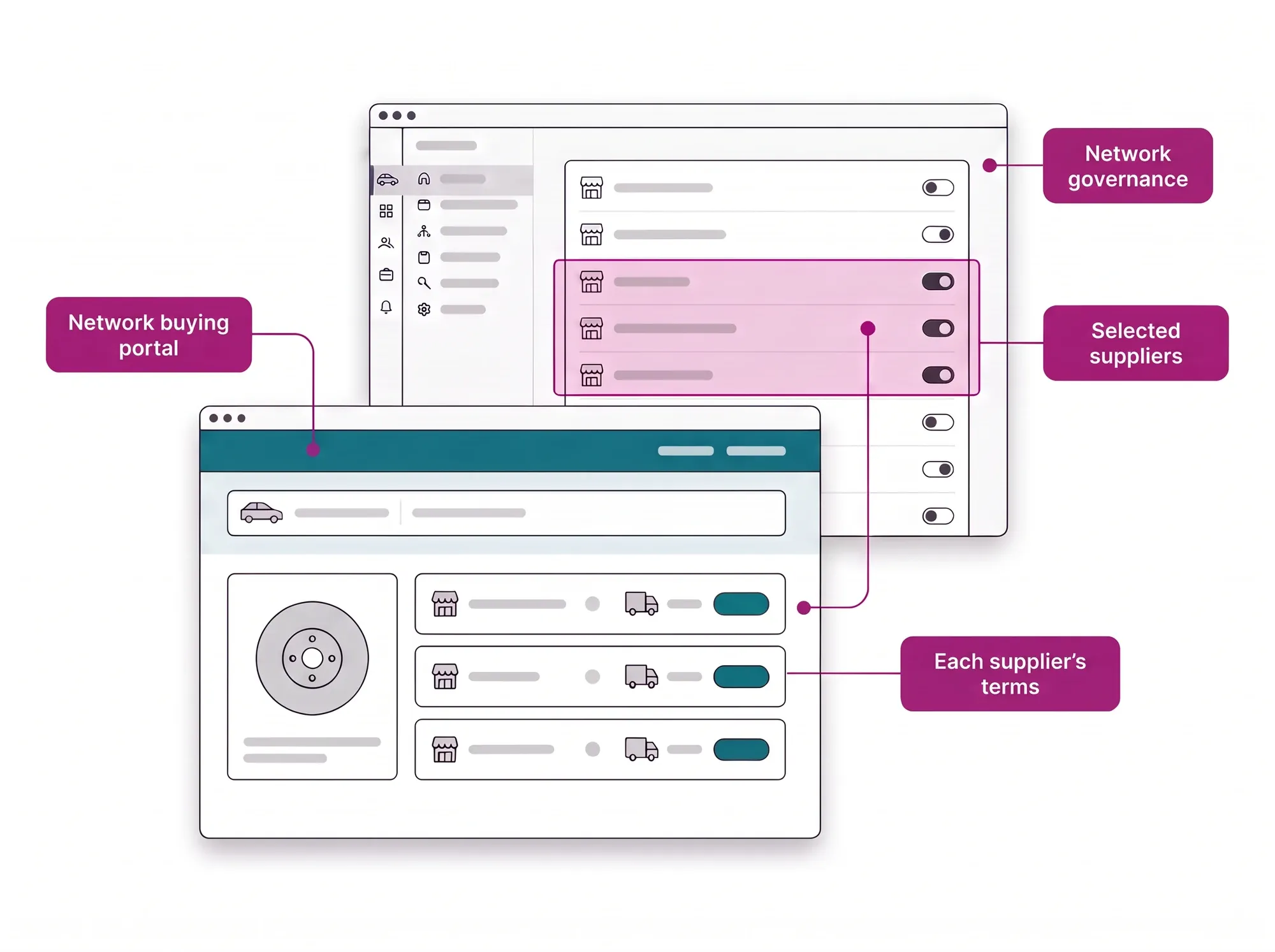
Pirelli Conecta is Pirelli’s negotiation portal in Brazil: the digital environment where Pirelli’s official network of dealers and automotive service centers buys parts from selected manufacturers and distributors. It has been live since 2025 on CWS Platform technology, serves a network of more than 450 workshops across Brazil and lists a catalog the portal itself advertises at over 60,000 items (suspension, brakes, filters, oils and fluids), searchable by vehicle: car, motorcycle, truck, bus and tractor. The network buys through the browser and through the app, available on Android and iOS.
This is a scale case: we describe the mechanism and the size of the operation, using public figures. The network’s business results belong to Pirelli and are not published here.
What changes when the marketplace is built by the buyer
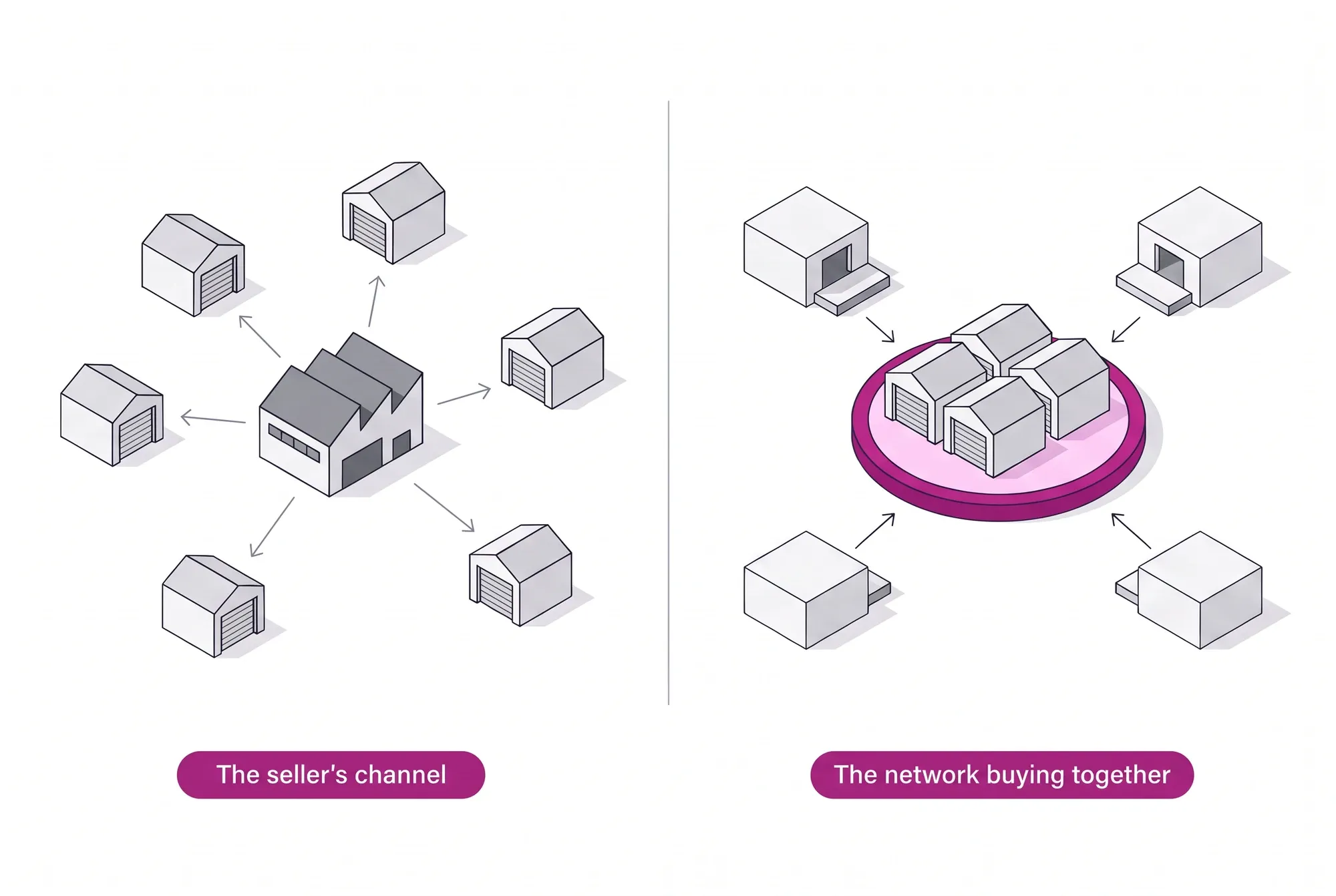
A typical B2B marketplace is built by the seller: a distributor or manufacturer opens a channel to move its own portfolio. Pirelli Conecta reverses the direction. The environment is built by the network that buys, planned by Pirelli together with the network’s own buying groups. The goal is not to sell more of one supplier’s products; it is to buy better from all of them.
That reversal changes the economics. A single workshop negotiates with the weight of one workshop. A network of hundreds of locations, with its demand organized in one place, negotiates with the weight of the network. The marketplace becomes the collective bargaining tool of a structure that used to buy in a scattered way, by phone, WhatsApp and spreadsheet, store by store.
Governance: the network sets the rules, the supplier sets the price
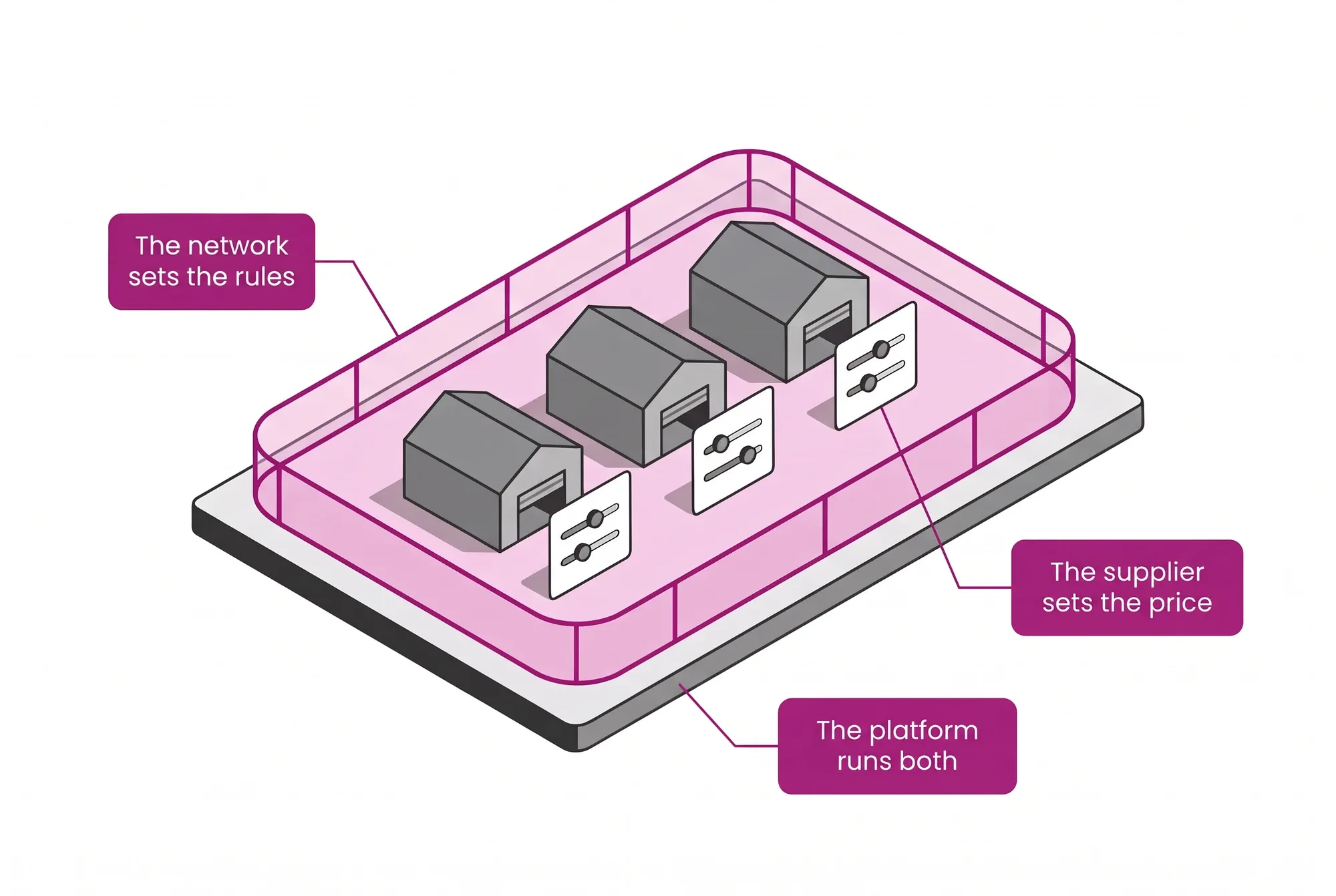
The principle behind the project fits in one line: Pirelli Conecta governs, CWS Platform enables, the supplier negotiates.
- The network governs the frame. Who participates, in which regions, under which general rules, catalog standards and compliance requirements.
- Suppliers keep full commercial autonomy. Each manufacturer and distributor configures its own prices, payment terms, lead times and approval limits, and negotiates freely inside the frame. The ecosystem does not set anyone’s price.
- The platform runs both layers at once. Access is regional: each store sees the products, stock and distributors relevant to its area, and each order is created with the terms that apply to that buyer, with that supplier.
That separation is what distinguishes a governed ecosystem from a marketplace that squeezes its suppliers. The rules are shared; the commercial decision stays with whoever owns it.
From phone quotes to real-time comparison
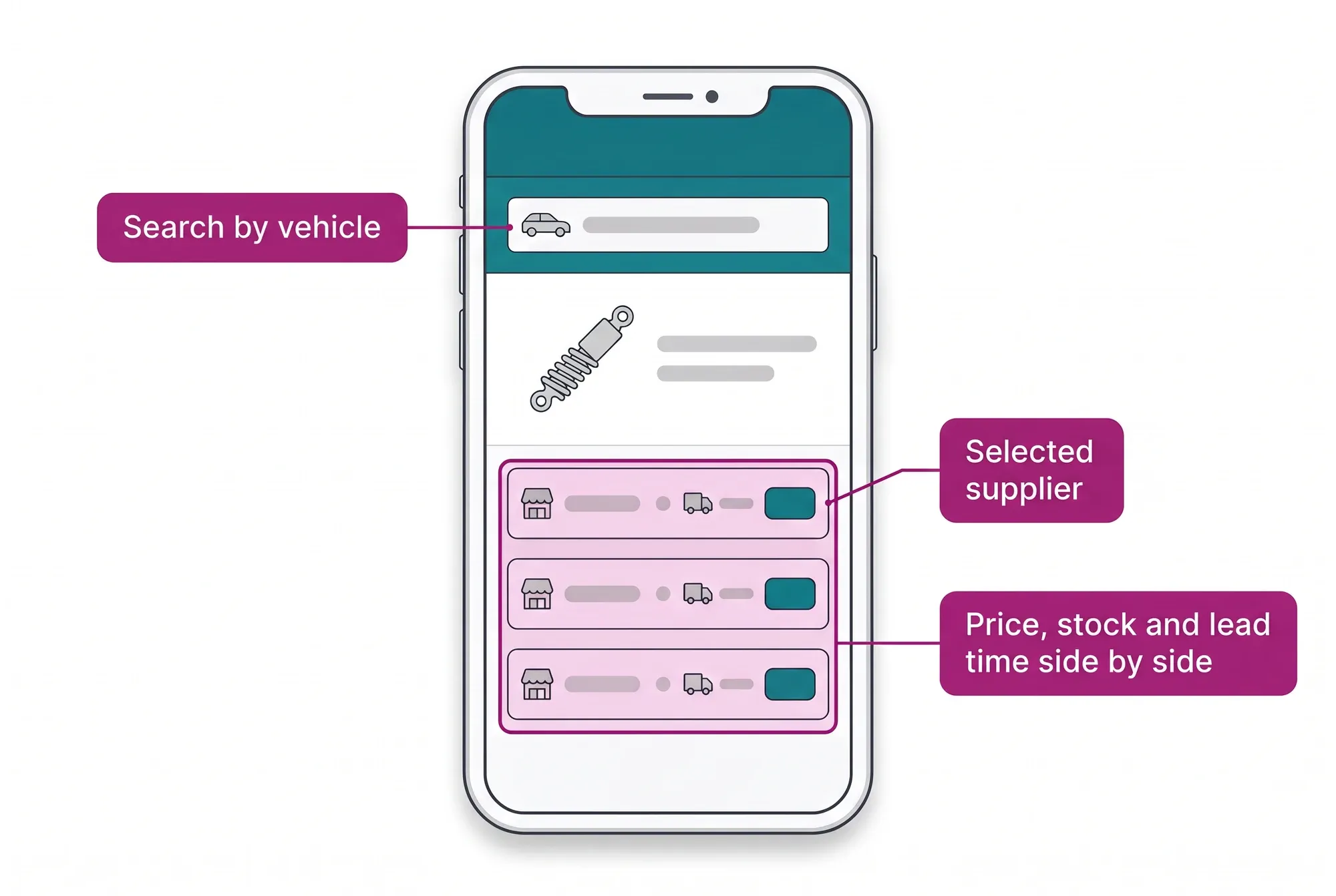
In parts replenishment, every order used to start with a round of quotes: call two or three distributors, wait, compare price, lead time and availability, then close. On Pirelli Conecta, price, stock and delivery time from several suppliers are visible in the same place. The quote stops being a round of phone calls and becomes a lookup.
With more selected suppliers competing for the same demand, competition works in the network’s favor: comparing offers becomes the default behavior, and average purchase cost is contested on every order instead of being negotiated once a year.
A standardized catalog, with manufacturers in the game
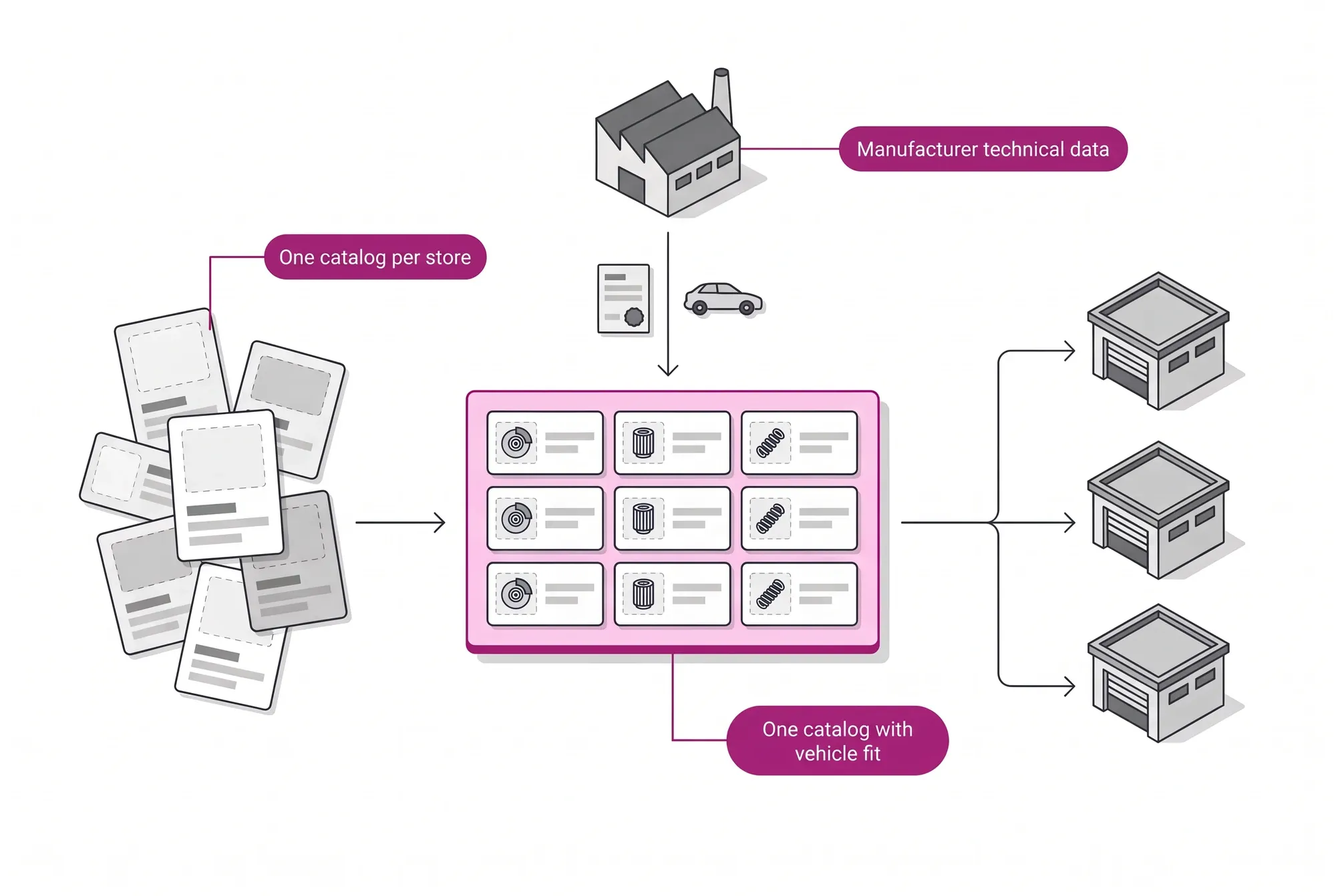
A decentralized network usually has one catalog per store, each with its own codes, descriptions and fitment gaps. On Pirelli Conecta the catalog is standardized for the whole network, with vehicle fitment, and manufacturers take part in building it: brand, technical data and fitment come from the people who make the part, organized by the network’s rules.
The same logic applies to offers. Campaigns, special terms and joint negotiations between Pirelli, partner manufacturers and distributors are built on real network demand data rather than estimates.
The best suppliers grow inside the network
In a governed environment, performance becomes a growth path. The most organized supplier, with a complete catalog, reliable stock, on-time delivery and good network ratings, naturally gets more demand. The network gains an objective criterion for choosing who grows with it, and suppliers gain a clear way to grow: be better, not just cheaper.
A better channel than WhatsApp
Negotiation between the network and suppliers happens inside the portal, through the negotiation chat, tied to the order and to the history of each relationship. Conversations that used to be scattered across WhatsApp groups, email and phone, with no record and no context, now have a place, an owner and a memory.
Purchasing data as a network asset
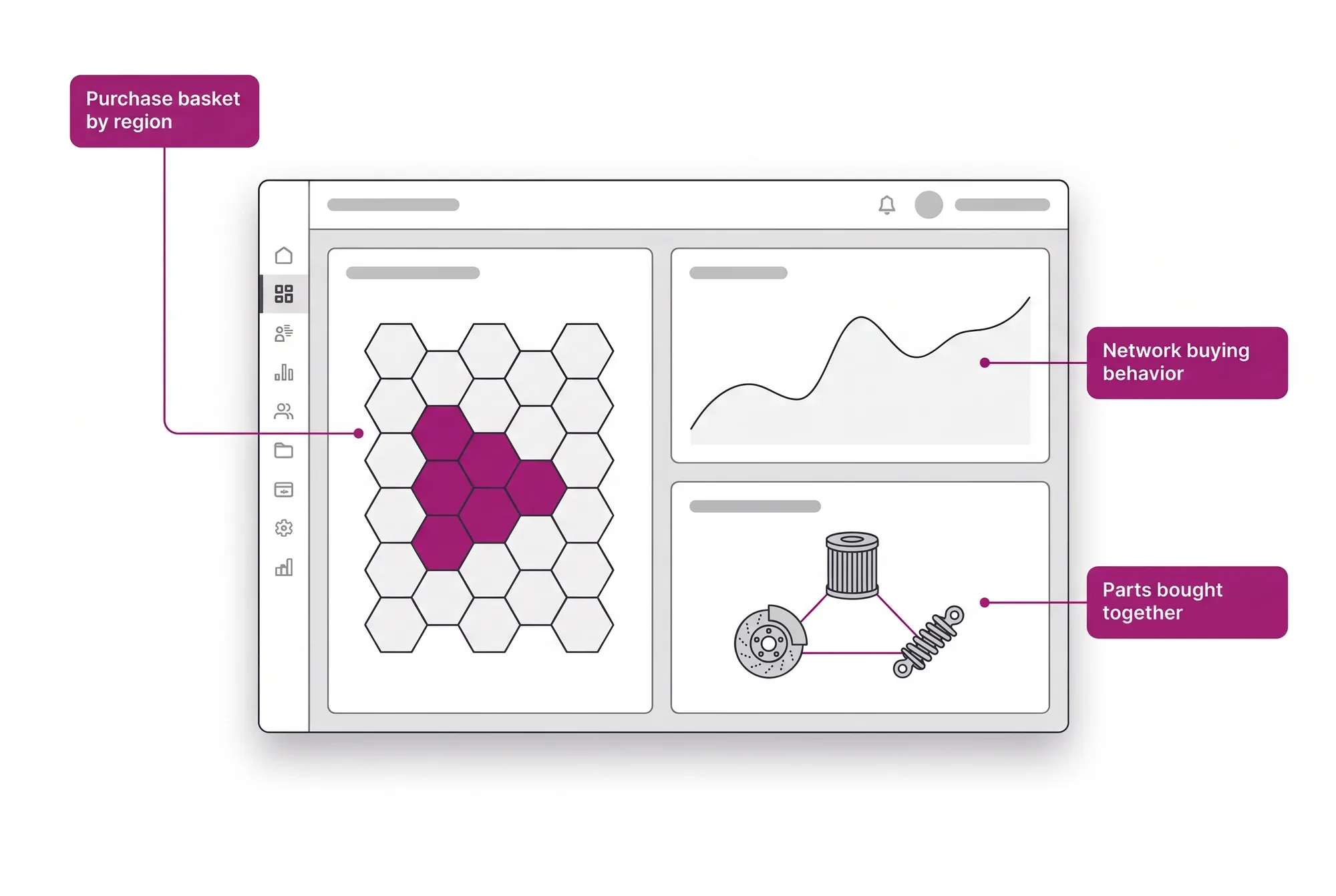
Every order generates structured data: what each location buys, how often, from whom, at what price, and which parts tend to be bought together. Pirelli and the buying groups can see the purchasing behavior of the entire network, the product basket by region and the relationships between parts.
That foundation opens the next step: BI on trustworthy data and Artificial Intelligence agents working inside a governed environment, where identity, price, stock and rules come from the platform, not from a spreadsheet. AI proposes; the mechanism guarantees that what was proposed can actually be bought.
A model for any decentralized network
Pirelli Conecta was built for a network of automotive service centers, but the mechanism fits any structure with many buying points and little coordination: franchise networks, associations, cooperatives, retail groups and a manufacturer’s accredited networks. Wherever there is scattered demand, too many suppliers and too little negotiation, a buyer-built B2B marketplace organizes the network, standardizes the catalog, captures the data and gives the network back the bargaining power it already had but could not exercise.
The takeaway: a B2B marketplace does not have to be the seller’s channel. Built from the buyer’s side, with governance over the ecosystem and autonomy for each supplier, it becomes the nervous system of an entire network.
Frequently asked questions about this case
What is the difference between a buyer-side marketplace and a regular one?
Who builds it. A regular marketplace is built by the seller to move its portfolio. Pirelli Conecta was built by the buying network, planned by Pirelli with the network's buying groups, to consolidate the demand of more than 450 workshops and negotiate with the weight of the network rather than the weight of each store.
Does the network control supplier prices?
No. The network governs the frame: who participates, in which regions, under which catalog and compliance standards. Each manufacturer and distributor sets its own prices, lead times, payment terms and approval limits. That separation is what attracts the best suppliers instead of pushing them away.
Does this work for franchise networks or other industries?
Yes. The mechanism depends on structure, not product: many buying points, fragmented suppliers and little coordination. Franchise networks, associations, cooperatives and manufacturers' accredited networks share that profile and gain the same things: a standardized catalog, supplier competition, purchasing data and joint negotiation.
Why doesn't this case show sales results?
Because the network's business results belong to Pirelli. This is a scale case: we show the mechanism and the size of the operation using public figures, such as the network of more than 450 workshops and the catalog the portal advertises at over 60,000 items.
Where does Artificial Intelligence come in?
On top of a governed environment. Every order generates structured data on what the network buys, from whom and which parts go together. With identity, price, stock and rules coming from the platform, BI and AI agents can make proposals safely, and the mechanism guarantees that what was proposed can actually be bought.
Qualified access
Talk to someone already running this mechanism in operation
A short conversation unlocks access.
Schedule a conversation →