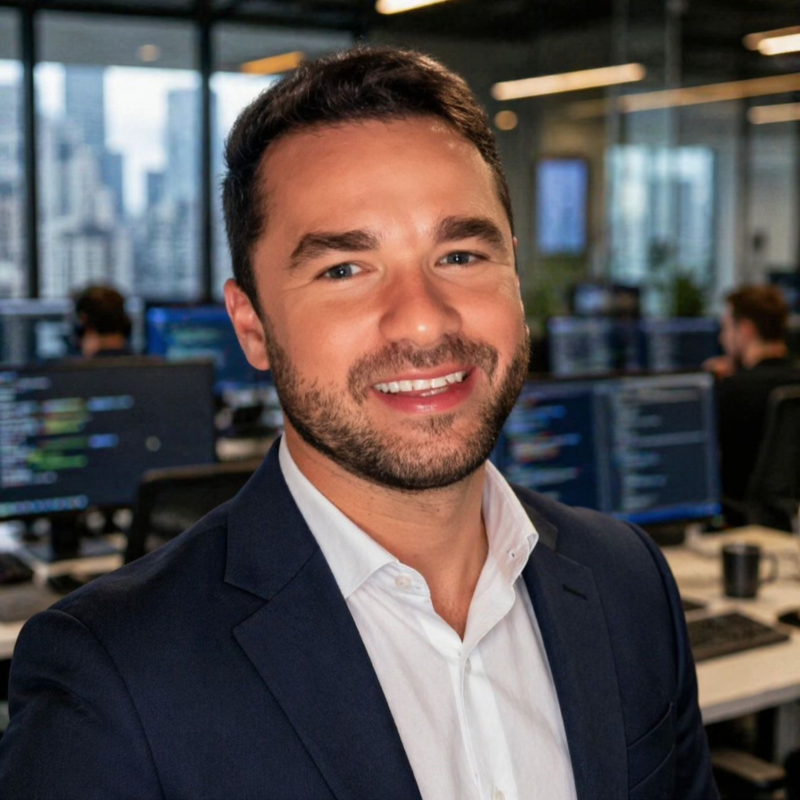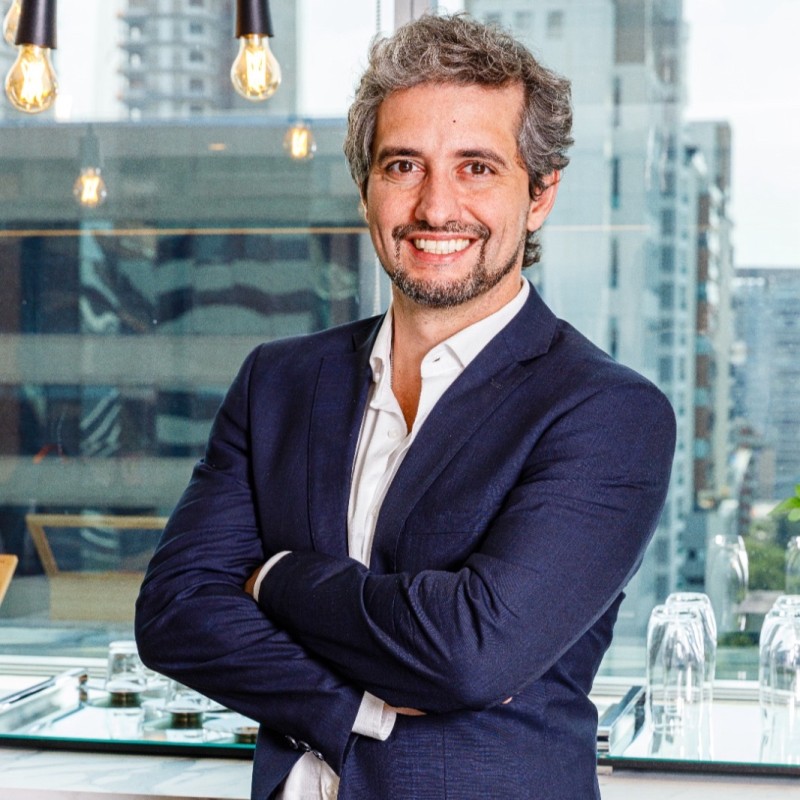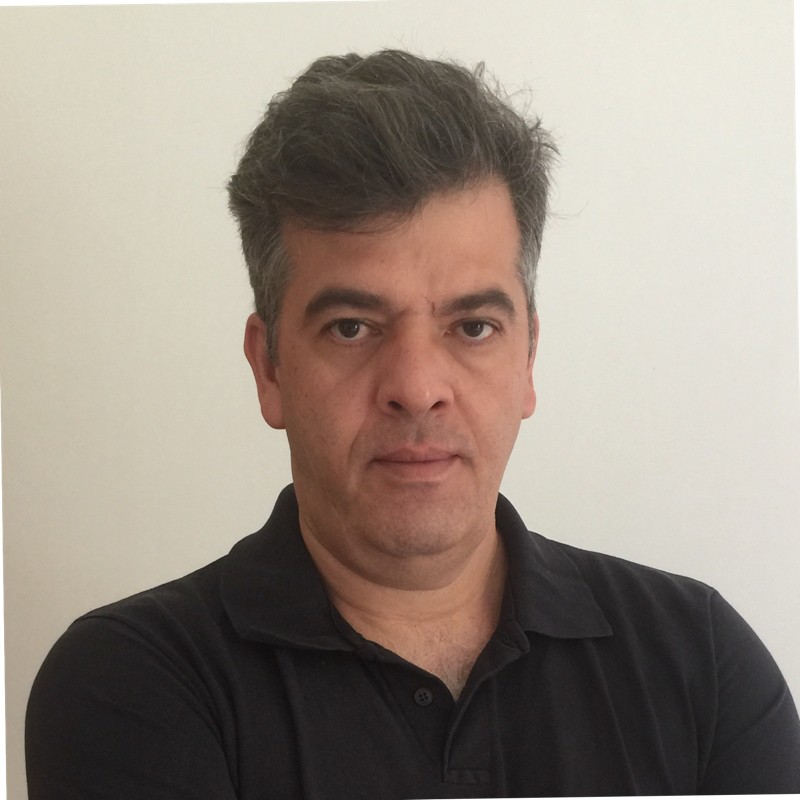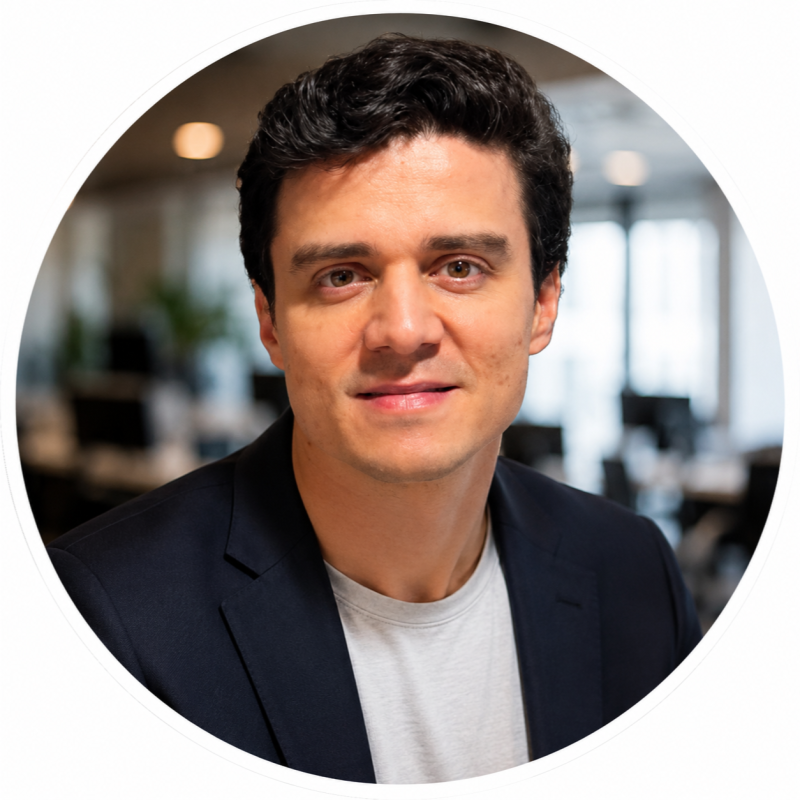
A Business Administration graduate from the University of São Paulo, Vinicius Dias came from financial markets, where he traded on an investment bank desk. That is where the observation that founded the company came from: currency, equities and energy were already transacted through software that carried the risk rule inside the operation itself, and there was no reason products should be any different — least of all those that behave like commodities, from tires to grain, from parts to chemical inputs.
Since 2012, that observation is the line he does not let the company lose. It explains why the platform was born multi-warehouse, with the catalog separated from inventory, back in 2013, before the market had a name for it. And it explains why AI entered here as an agent operating under the same rules as a human seller, rather than a suggestion layer on top of a process no one governs. Holding that line meant learning technology deeply without having come from it, which is what makes it possible to decide what goes into the product without outsourcing that decision to whoever builds it.
The work runs in two directions that rarely fit in the same person. Outward, he brings the reality of the operation to the people who invest in the company, and comes back with the reading of those who have seen the same problem in other markets. Inward, he translates for the team what that reading changes about the route. It is the same movement he makes with customers: absorb the real operation, read new technology, and reconnect it to the original thesis instead of letting the platform become a sum of fulfilled requests.
The rest of the work never shows up in the product. Assembling a high-performance technology team in Brazil and keeping it together, cohesive and motivated across fourteen years, including the cycles when that is hardest. Selling entirely new technology into traditional sectors, where the strongest competitor is not another company but the way things have always been done. Competing for large projects against the world's biggest technology companies. And backing each of those projects with a return thesis rather than a promise, which is the financial instinct he carried into the commercial process: investment in technology has to show its return before approval, not after the money is spent.
For anyone who hires CWS Platform, that is what keeps the next decade of product answering the same question as the first: what does it cost to close a deal, and how much of that cost can be removed without removing control from the people who decide.